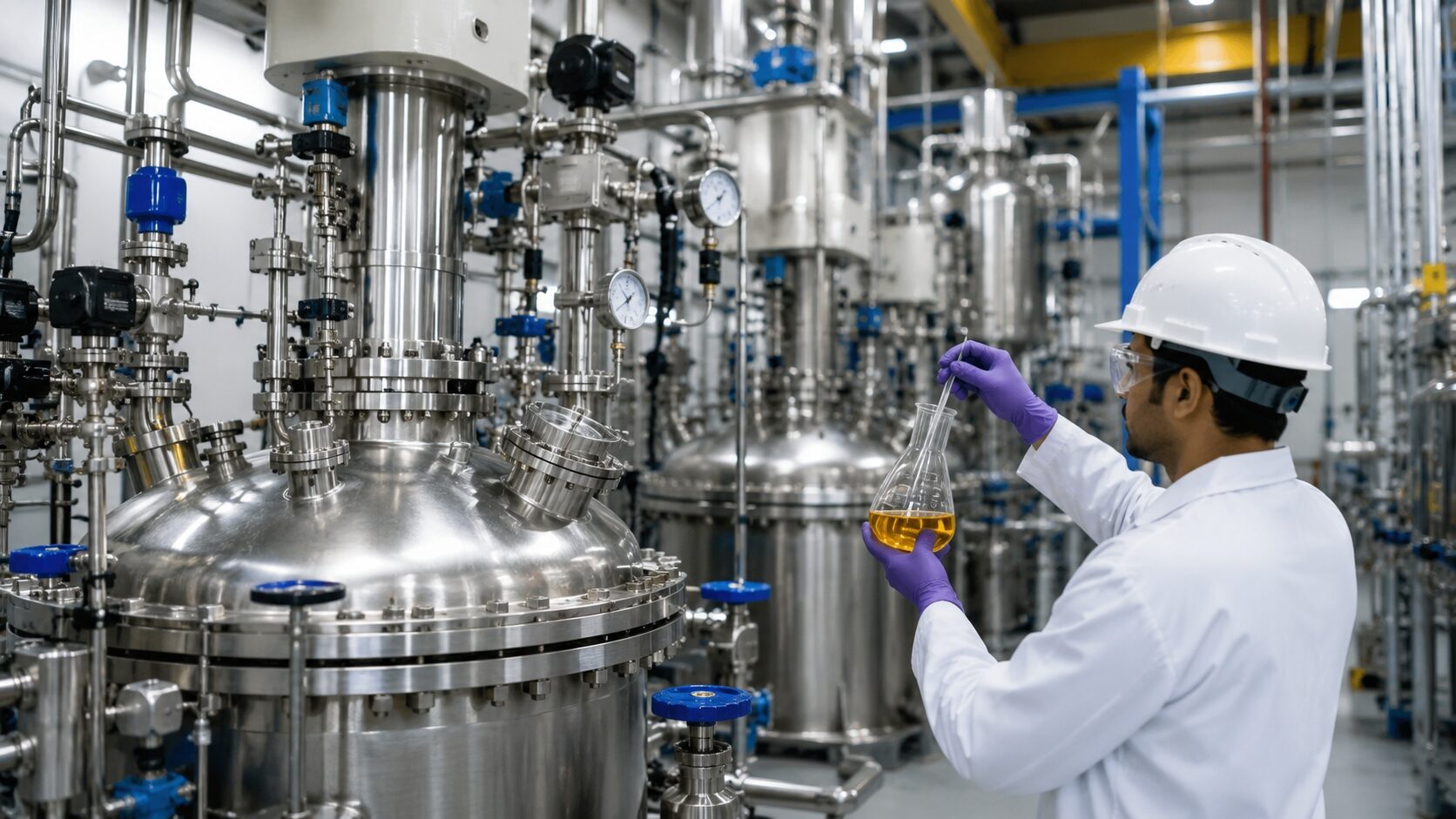
Available Dates & Venues
No dates are currently available for this course.
Introduction
Chemical Reaction Engineering (CRE) is the core discipline that governs how chemical reactions occur, how reactors behave, and how conversion, selectivity, and yield can be optimised in industrial processes. In petrochemical, refining, polymer, fertilizer, and chemical manufacturing plants, engineers must understand reaction kinetics, reactor design, catalytic processes, heat/mass transfer interactions, and troubleshooting of reaction systems.
This course provides a comprehensive foundation in reaction kinetics, reactor modelling, catalytic behaviour, temperature control, conversion optimisation, and troubleshooting of industrial reactors. It is designed to strengthen technical capability and enhance operational excellence across chemical and petrochemical environments.
The GTMCS Chemical Reaction Engineering course delivers a practical, industry‑aligned, and competency‑focused learning experience.
This Training Course Will Highlight
Reaction kinetics & rate laws
Reactor design (CSTR, PFR, batch)
Catalysis & catalyst deactivation
Temperature control & heat effects
Conversion & selectivity optimisation
Mass transfer limitations
Reaction troubleshooting
Industrial reactor case studies
Course Benefits
Strengthen understanding of reaction kinetics & reactor behaviour
Improve troubleshooting & diagnostic capability
Enhance conversion, selectivity & yield optimisation
Build confidence in catalytic reaction systems
Support safe & efficient reactor operation
Align workforce with global chemical engineering standards
Tools & Techniques Covered
Rate law development
Reaction order determination
Reactor modelling tools
Catalyst performance evaluation
Heat/mass transfer diagnostic tools
Troubleshooting logic models
Practical Workshops
Reaction rate calculations
Reactor modelling exercises
Catalyst deactivation analysis
Temperature control case studies
Reaction troubleshooting simulation
Real‑World Case Studies
Reactor runaway due to poor temperature control
Conversion drop caused by catalyst deactivation
Mass transfer limitations reducing reaction rate
Hot spot formation in fixed‑bed reactors
Off‑spec product due to incorrect residence time
Industry Relevance
This course is essential for:
Chemical & petrochemical engineers
Process engineers & operators
Production & manufacturing teams
Maintenance & reliability professionals
HSSE & process safety teams
Future Skills Alignment
Reaction engineering literacy
Troubleshooting competency
Process optimisation
Catalytic reaction understanding
Industrial problem‑solving
Objectives
By the end of this training course, participants will be able to:
Understand reaction kinetics & rate laws
Analyse reactor types & behaviour
Evaluate catalytic reaction performance
Diagnose reaction deviations & troubleshoot effectively
Optimise conversion, selectivity & yield
Support safe & efficient reactor operations
Certificates
Upon successful completion of this training course, participants will receive a GTMCS Certificate of Completion.
Curriculum
- 5 Sections
- 43 Lessons
- 10 Weeks
- Day 1 – Reaction Kinetics & Rate Laws7
- Day 2 – Reactor Types & Behaviour12
- 2.1CSTR
- 2.2Mixing behaviour
- 2.3Steady state operation
- 2.4PFR
- 2.5Plug flow assumptions
- 2.6Residence time distribution
- 2.7Batch Reactors
- 2.8Industrial applications
- 2.9Time dependent behaviour
- 2.10Workshop: Reactor modelling exercises
- 2.11Exercise: Residence time calculations
- 2.12Case Study: Off spec product due to incorrect residence time
- Day 3 – Catalysis & Catalyst Deactivation7
- Day 4 – Heat & Mass Transfer in Reactors11
- 4.1Heat Transfer
- 4.2Exothermic & endothermic reactions
- 4.3Temperature control
- 4.4Hot spot formation
- 4.5Mass Transfer
- 4.6External & internal diffusion
- 4.7Mass transfer limitations
- 4.8Effectiveness factor
- 4.9Workshop: Heat/mass transfer diagnosis
- 4.10Exercise: Identify mass transfer limitations
- 4.11Case Study: Hot spot formation in fixed bed reactors
- Day 5 – Reaction Troubleshooting & Optimisation6