Available Dates & Venues
Classroom Schedule
| Date | Venue | Format | Fees | Registration |
|---|---|---|---|---|
| July 11, 2026 - July 18, 2026 | Saudi Arabia - Riyadh | Classroom | USD 0.00 | Registration closed |
Introduction
Process control and instrumentation are the nervous system of chemical and petrochemical plants. They ensure stable operation, maintain product quality, protect equipment, and prevent unsafe conditions. Engineers and operators must understand control loops, instrumentation devices, automation systems, and troubleshooting techniques to maintain reliable and efficient plant performance.
This course provides a comprehensive foundation in process control principles, instrumentation technologies, control loop tuning, DCS/PLC systems, and troubleshooting of control‑related deviations. It is designed to strengthen technical capability and enhance operational excellence across chemical and petrochemical environments.
The GTMCS Process Control & Instrumentation for Chemical Plants course delivers a practical, industry‑aligned, and competency‑focused learning experience.
This Training Course Will Highlight
Process control fundamentals
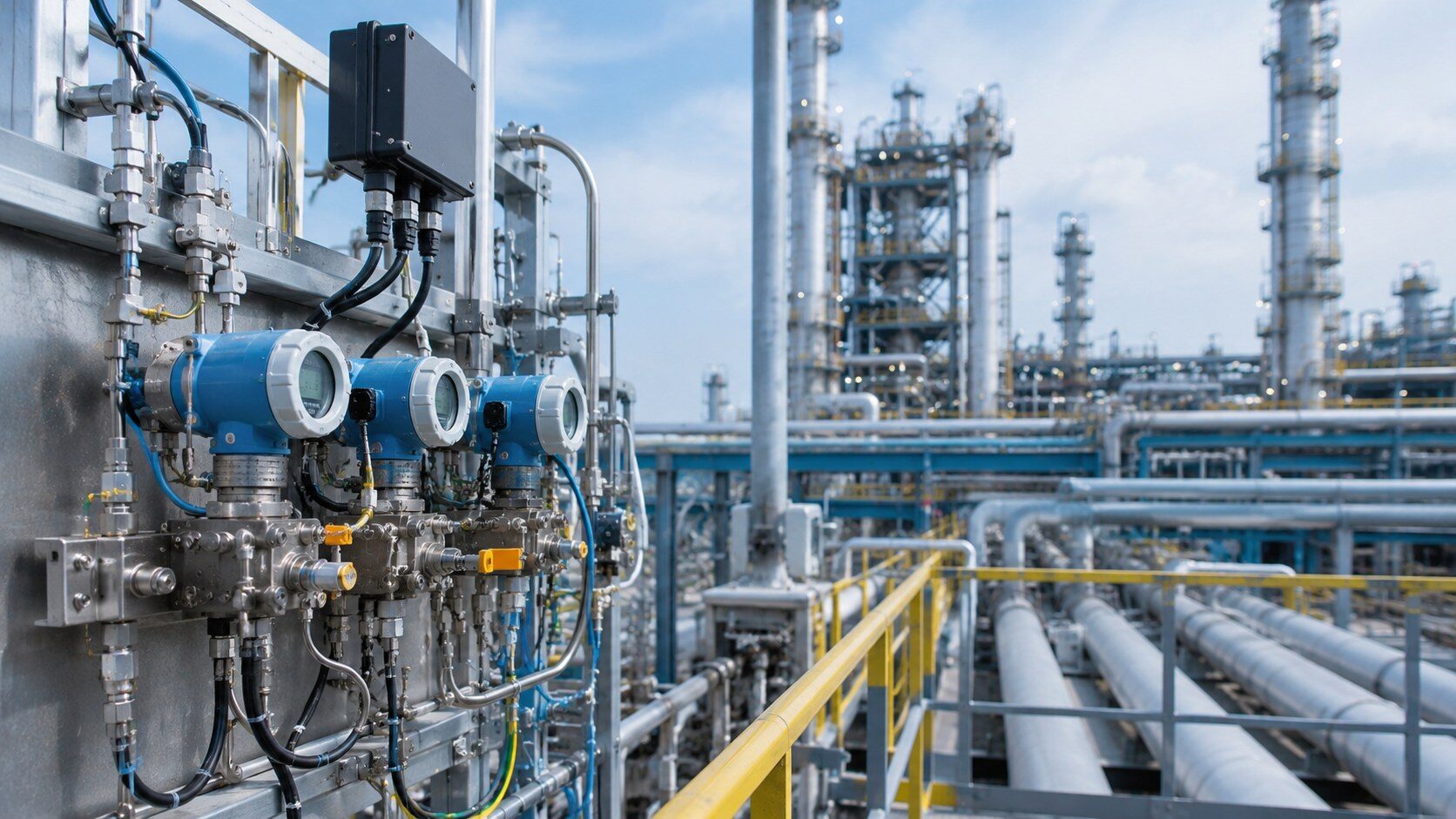
Instrumentation devices (flow, pressure, temperature, level)
Control loops & tuning
PID control & advanced strategies
DCS & PLC systems
Automation & control logic
Process alarms & interlocks
Troubleshooting control systems
Course Benefits
Strengthen understanding of process control & instrumentation
Improve troubleshooting & diagnostic capability
Enhance plant stability & product quality
Build confidence in control loop tuning & automation
Support safe & efficient plant operations
Align workforce with global control system standards
Tools & Techniques Covered
PID tuning methods
Instrument calibration tools
Control loop performance analysis
DCS/PLC logic interpretation
Alarm management tools
Troubleshooting logic models
Practical Workshops
Control loop tuning
Instrument calibration exercises
DCS/PLC logic interpretation
Alarm & interlock case studies
Control system troubleshooting
Real‑World Case Studies
Reactor temperature oscillation due to poor PID tuning
Distillation instability caused by faulty level transmitter
Compressor surge triggered by incorrect control logic
Off‑spec product due to flow control deviation
Safety interlock failure leading to process upset
Industry Relevance
This course is essential for:
Process & chemical engineers
Instrumentation & control engineers
Operations & production teams
Maintenance & reliability professionals
HSSE & process safety teams
Future Skills Alignment
Automation literacy
Troubleshooting competency
Control loop optimisation
Instrumentation understanding
Industrial problem‑solving
Objectives
By the end of this training course, participants will be able to:
Understand process control fundamentals & instrumentation devices
Analyse control loops & tune PID controllers
Interpret DCS/PLC logic & automation sequences
Diagnose control‑related deviations & troubleshoot effectively
Manage alarms, interlocks & safety systems
Support safe & efficient plant operations
Certificates
Upon successful completion of this training course, participants will receive a GTMCS Certificate of Completion.
Curriculum
- 5 Sections
- 49 Lessons
- 10 Weeks
- Day 1 – Fundamentals of Process Control7
- Day 2 – Instrumentation Devices & Calibration8
- 2.1Flow measurement devices
- 2.2Pressure & level transmitters
- 2.3Temperature sensors (RTD, thermocouple)
- 2.4Instrument calibration
- 2.5Signal transmission (4–20 mA, HART)
- 2.6Workshop: Instrument calibration practice
- 2.7Exercise: Identify instrumentation faults
- 2.8Case Study: Distillation instability caused by faulty transmitter
- Day 3 – Control Loops, PID & Advanced Control13
- 3.1Control Loops
- 3.2Open & closed loop control
- 3.3Loop performance indicators
- 3.4PID Control
- 3.5Proportional, integral & derivative action
- 3.6Tuning methods (Ziegler–Nichols, trial and error)
- 3.7Advanced Control
- 3.8Cascade control
- 3.9Ratio control
- 3.10Split range control
- 3.11Workshop: PID tuning simulation
- 3.12Exercise: Analyse loop performance
- 3.13Case Study: Off spec product due to flow control deviation
- Day 4 – DCS, PLC & Automation Systems15
- 4.1DCS
- 4.2Architecture & components
- 4.3Operator interface
- 4.4Control logic interpretation
- 4.5PLC
- 4.6Ladder logic
- 4.7Function block diagrams
- 4.8Safety systems
- 4.9Automation
- 4.10Interlocks
- 4.11Shutdown logic
- 4.12Alarm management
- 4.13Workshop: DCS/PLC logic interpretation
- 4.14Exercise: Alarm & interlock analysis
- 4.15Case Study: Compressor surge due to incorrect control logic
- Day 5 – Troubleshooting & Operational Excellence6