Available Dates & Venues
Classroom Schedule
| Date | Venue | Format | Fees | Registration |
|---|---|---|---|---|
| June 6, 2026 - June 7, 2026 | Saudi Arabia - Jeddah | Classroom | USD 100.00 | Registration closed |
Overview:
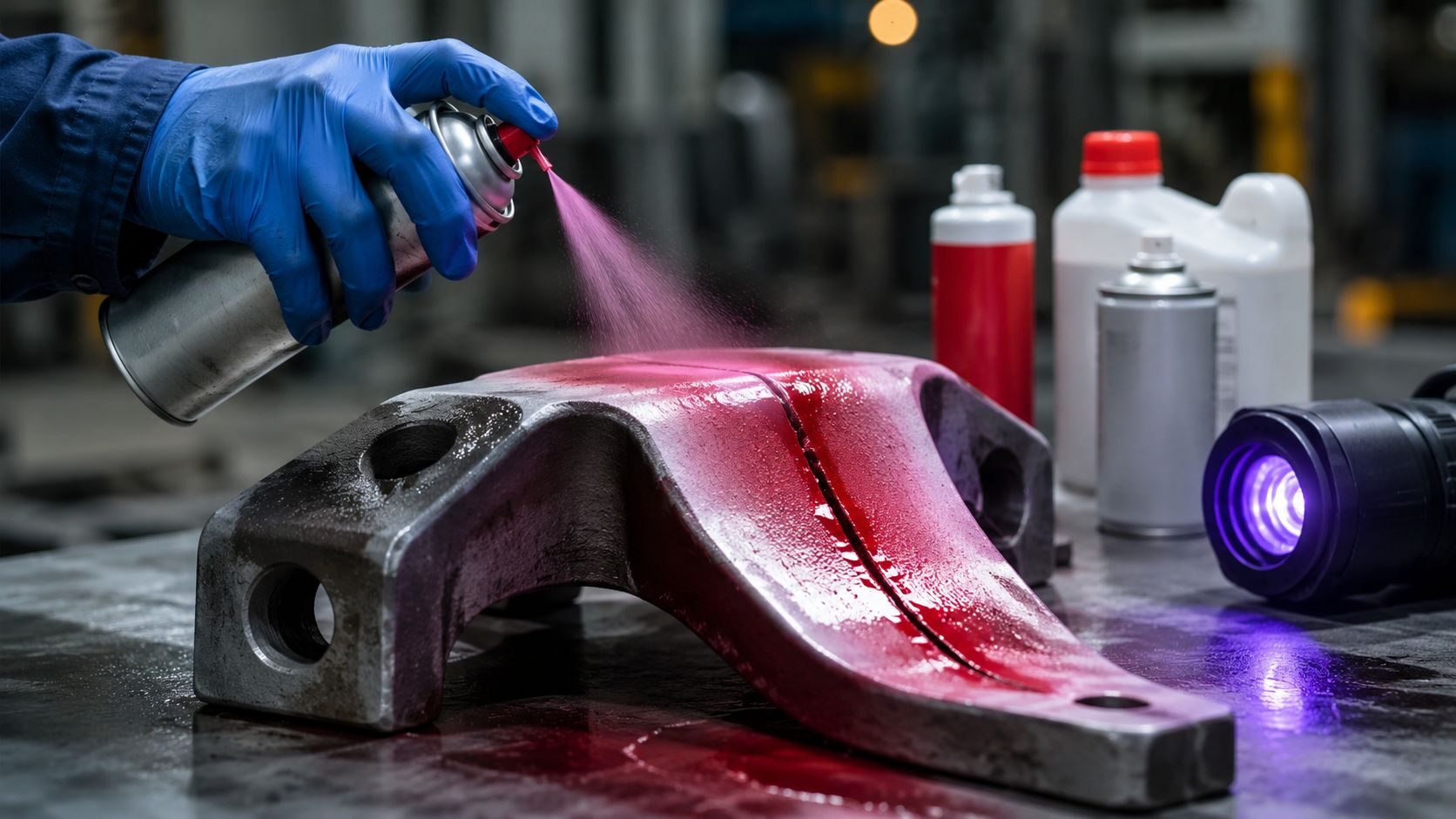
Penetrant Testing (PT) is used to detect surface‑breaking defects in non‑porous materials. This course covers dye penetrant inspection techniques, developer application, and interpretation of indications.
Learning Outcomes:
- Understand PT principles and materials
- Perform PT using solvent, water‑washable, and post‑emulsifiable methods
- Identify cracks, laps, porosity, and surface defects
- Apply acceptance criteria from codes and standards
Who Should Attend:
Inspectors, welders, QA/QC teams, maintenance technicians.
Course Modules:
- PT Principles & Materials
- Surface Preparation Techniques
- Penetrant Application Methods
- Developer Types & Application
- Indication Interpretation
- Acceptance Standards & Reporting
Delivery Format:
Onsite / Practical Lab / Hybrid
Certification;
ISO 9712 / ASNT
Introduction
Penetrant Testing (PT), also known as Dye Penetrant Inspection (DPI), is one of the most widely used surface Non‑Destructive Testing methods for detecting cracks, porosity, laps, seams, leaks, and other surface‑breaking discontinuities. PT is applicable to both ferrous and non‑ferrous materials, making it essential across Oil & Gas, Petrochemical, Marine, Aerospace, Power, Manufacturing, and Civil Infrastructure sectors.
PT Level I & II certification ensures inspectors can perform penetrant application, dwell time control, developer application, indication interpretation, and defect evaluation according to international codes such as ASME, AWS, API, ISO, and EN.
This GTMCS Penetrant Testing Level I & II program is aligned with ISO 9712 and ASNT SNT‑TC‑1A, combining technical theory, hands‑on practice, and certification preparation.
This training course will highlight:
- PT principles, penetrant types, and inspection techniques
- Surface preparation and cleaning requirements
- Visible and fluorescent penetrant systems
- Indication interpretation and defect evaluation
- Acceptance criteria from global standards
Course Benefits
- Gain competency in PT inspection techniques
- Identify surface‑breaking defects accurately
- Apply acceptance criteria from ASME, AWS, API, ISO
- Prepare for ISO 9712 / ASNT Level I & II certification
- Improve inspection reliability and repeatability
- Strengthen QA/QC and asset integrity programs
Tools & Technologies Covered
- Visible and fluorescent penetrants
- Solvent removable, water washable, and post‑emulsifiable systems
- Developers: dry, wet, non‑aqueous
- UV lamps, light meters, and inspection tools
- Cleaning agents and surface preparation tools
Practical Workshops
- Visible and fluorescent PT application
- Surface preparation and cleaning exercises
- Indication interpretation exercises
- Weld inspection and defect evaluation
- Level II reporting and acceptance criteria simulation
Real‑World Case Studies
- Pipeline and pressure vessel weld inspection
- Aerospace and turbine component PT
- Marine and offshore PT applications
- Casting and forging defect detection
- Shutdown/turnaround PT operations
Industry Relevance
This course is essential for:
- Oil & Gas and Petrochemical inspectors
- Welding inspectors and QA/QC teams
- Mechanical, civil, and structural inspectors
- Marine and offshore inspection teams
- Manufacturing and fabrication workshops
Future Skills Alignment
- Surface defect detection competency
- Fluorescent penetrant inspection skills
- Defect interpretation and evaluation
- Technical reporting and documentation
- Foundation for advanced surface NDT methods
Objectives
By the end of this training course, participants will be able to:
- Perform PT inspections to Level I & II competency
- Identify and evaluate surface‑breaking flaws
- Use penetrants, developers, and UV tools correctly
- Apply acceptance criteria from ASME, AWS, ISO
- Prepare accurate PT inspection reports
- Pass ISO 9712 / ASNT Level I & II examinations
Training Methodology
- Instructor‑led technical demonstrations
- Hands‑on inspection with real components
- Case study analysis
- Scenario‑based defect evaluation
- Daily quizzes and certification preparation
Organisational Impact
- Improved surface inspection reliability
- Reduced welding failures and rework
- Enhanced compliance with global standards
- Stronger asset integrity and safety assurance
- Better documentation and reporting consistency
Personal Impact
- Higher technical confidence in PT inspection
- Improved defect recognition and evaluation skills
- Stronger understanding of penetrant chemistry
- Career advancement in NDT and QA/QC roles
- Eligibility for ISO 9712 / ASNT certification
Who Should Attend?
- NDT trainees and PT beginners
- Welding inspectors and QA/QC staff
- Mechanical, civil, and structural inspectors
- Fabrication and workshop supervisors
- Anyone preparing for PT Level I & II certification
Certificates
Upon successful completion, participants receive a GTMCS Certificate of Completion and are prepared for ISO 9712 / ASNT Level I & II certification exams.
Curriculum
- 5 Sections
- 20 Lessons
- Lifetime
- Day 1 – Fundamentals of Penetrant Testing4
- Day 2 – Penetrants, Developers & Techniques4
- Day 3 – Indication Interpretation & Flaw Detection4
- Day 4 – PT Level II Evaluation4
- Day 5 – Certification Preparation & Final Assessment4

Requirements
Features
Target audiences